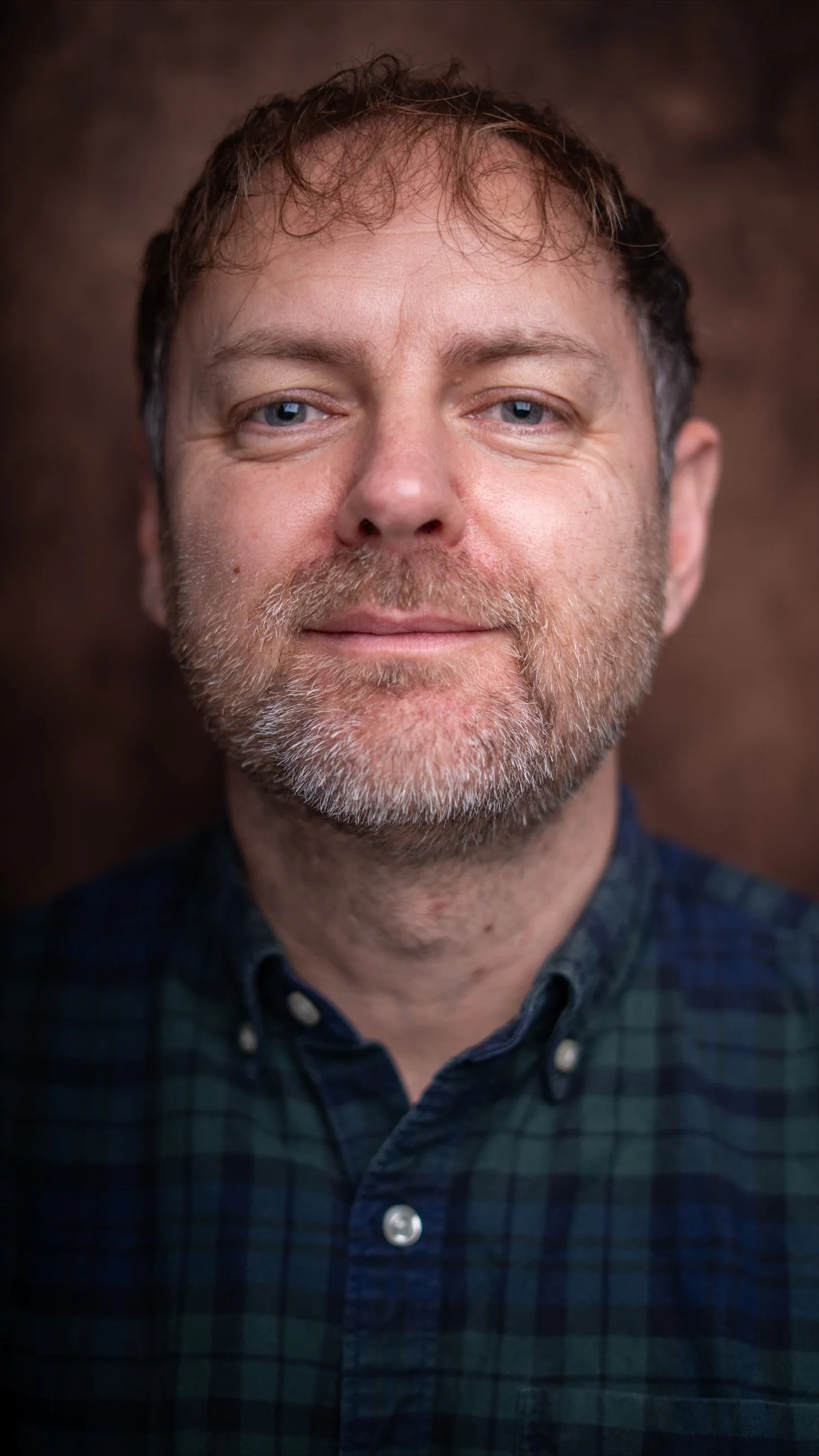
Filmmaker Spotlight - Lee Dilley
Welcome to the Filmmaker Spotlight – this series shines a light on filmmakers, actors, editors, and more, as we ask them a few questions and uncover why they love what they do.
This time - Lee Dilley
Writer/Director
Tell us a bit about yourself, how did you get into the industry?
Based in Derby, I studied Film and Video Production at the University of Derby. Before my projects began gaining attention, I volunteered on as many film productions as possible, working my way up from runner and gaining hands-on experience across a range of roles. This early grounding gave me a practical understanding of production from the ground up.
In my second year at university, I co-wrote and independently funded a sitcom titled Jobseekers, selling my car to help finance the project alongside additional support from contributors (full credits available on IMDb).
Jobseekers received press coverage in The Telegraph and on BBC Radio, attracting attention from production companies. Following a sell-out screening at BAFTA in London and QUAD Cinema in Derby, the project entered development with the BBC. After two years in development, progress unfortunately stalled when a similarly themed sitcom, Job Lot, was commissioned and released.
Following this, I co-wrote the short film Neutral, which performed successfully on the festival circuit. I then co-wrote and co-directed the sitcom In the Dog House, which was later acquired by Amazon as a standalone pilot. I also directed Blondi’s War, further expanding my directing portfolio.
Building on this momentum, I was selected for a BBC mentoring programme, where I was mentored for nine months by the Head of BBC Comedy. During this time, I also wrote for BBC Radio 4’s The News Quiz, further developing my voice in topical comedy and broadcast writing.
When I encountered difficulty getting industry professionals to read my children’s animation script Mushy Pea, I adapted the concept into a picture book. After reaching #2 on Amazon, the book’s success helped secure industry interest in the original scripts. I later used a similar strategy for The Marmalade Nebula, creating both an audio version and a comic adaptation to build audience engagement and industry visibility.
Both Mushy Pea and The Marmalade Nebula are now in pre-production.
All of this work was achieved over the course of a decade while maintaining various 9–5 jobs outside the industry — including roles in teaching, working as a postman, barman, marketing assistant, audition porter, and more — balancing financial stability with a continued commitment to writing and directing.
Who or what inspires you in your work?
My passion and inspiration is all film, i just love visual storytelling. However as a writer I initially wanted to write a sitcom, highly inspired by Only Fools and Horses, Blackadder, Porridge, and later The Office.
With film, it was Spielberg. He’s a hero of mine , he’s pure wonder and every film he made felt like it was made for me. I guess that’s the genius of a great storyteller. More recently, Nolan , I love his ability to play with time.
What keeps me going is that it feels normal, natural. Without it, I’m lost. I create my dreams so I can get some sleep.
What’s the smallest creative decision you’ve made that had the biggest impact on a film?
I do feel like it’s a number of small creative decisions, like a game of dot to dot, then filling in the lines on the shoot. But one thing I can think of is hole-punching the script and having it tied around my neck — you wouldn’t believe how many times I lose the script.
How much do location, budget, or production reality shape your writing?
Personally, I set the stage first. I usually begin with an emotional core and a film title which often acts as part of the synopsis and then build the world around a chosen location. For us indie’s, locations are the most expensive and difficult to secure.
How does writing for live action differ from writing for animation?
I might come across as an amateur here, but personally I think it comes down to genre. My animation tends to have a faster pace, though that’s largely because it’s aimed at a younger audience. Locations are still restricted, but space is cheaper to draw than a forest, so the settings can often be more imaginative and exotic.
Has anything you do outside of the film industry helped you within it?
Every single thing! It’s a direct mirror — all of my films are drawn from events in my life. I find it therapeutic. We all have good and bad emotions; if you can channel the bad into your writing, you can fully embrace the good. For example, I wrote Jobseekers when I was unemployed.
I also have a habit of talking to everyone I meet. I feel that everyone has something to teach you, and I love unforgettable dialogue. As a writer or director, you have to understand people.
What’s one project you’re especially proud of, and why?
The Marmalade Nebula — most projects can take 5–12 years to get made, and Marmalade is up there, taking almost a decade to develop and sell. I find pure joy in writing it; the characters are very distinctive, and the humor is a personal reflection of my own. The script was also shortlisted for the BAFTA Children’s Writing award and longlisted in the BBC Writing for Children competition.
But the biggest reason I’m proud is that I never compromised. Some of the humor is unique and doesn’t fully translate for worldwide audiences. Each character honestly represents parts of my own personality — good and bad: cowardly and brave, helpful and helpless, and more.
What have you learnt over time that you wish you knew when you started?
The decision not to wait for others — not to wait for “permission.” You’d waste your life waiting for someone else to give the green light. Don’t put all your words in one book (eggs-in-one-basket analogy). Have multiple projects on the go, at various stages, and pitch them to different places.
Favourite on-set snack?
Who gets time to eat? Probably nuts.
Any advice for people wanting to do the job that you do?
I have to be careful about dishing out advice — I’ve made plenty of mistakes myself. As a writer: read! Write! There’s nothing stopping you other than time. There are plenty of free scripts online to study.
Screenwriting is like learning a new language — you only know if it translates on screen when you see it. So make it, even with friends on your iphone. Don’t be a one-trick pony. When I pitched in front of the BBC departments, they asked me what other scripts or stories I was working on. It took me nine stories before they were interested. Everyone has a story in them; writers have hundreds.
How do you get a script made? If you want to be a screenwriter without connections, you’ll also need to act as executive producer, costume designer, props manager, location scout, casting director, and more.
As a director, no one ever posts an ad saying “Director Wanted.” If you want to direct, you have to carve that path yourself.
CREW! You’ll notice filmmakers often use the same team repeatedly. Once you find your dream team, there’s no stopping you — everyone working in harmony toward the same goal. How do you do this? Trial and error, or blind luck. Whichever comes first, take it.
Currently working on a project or want to plug something?
Yes, and thank you. Arcade (1987) follows Sherry as she battles to immortalise her dying father’s legacy in an ’80s arcade competition. We shot a 10-minute proof-of-concept short/scene, and after releasing the trailer, we were approached by a distributor. We have now secured financing and brought a BAFTA-nominated producer on board. We’re hoping to enter pre-production later this year, 2026.