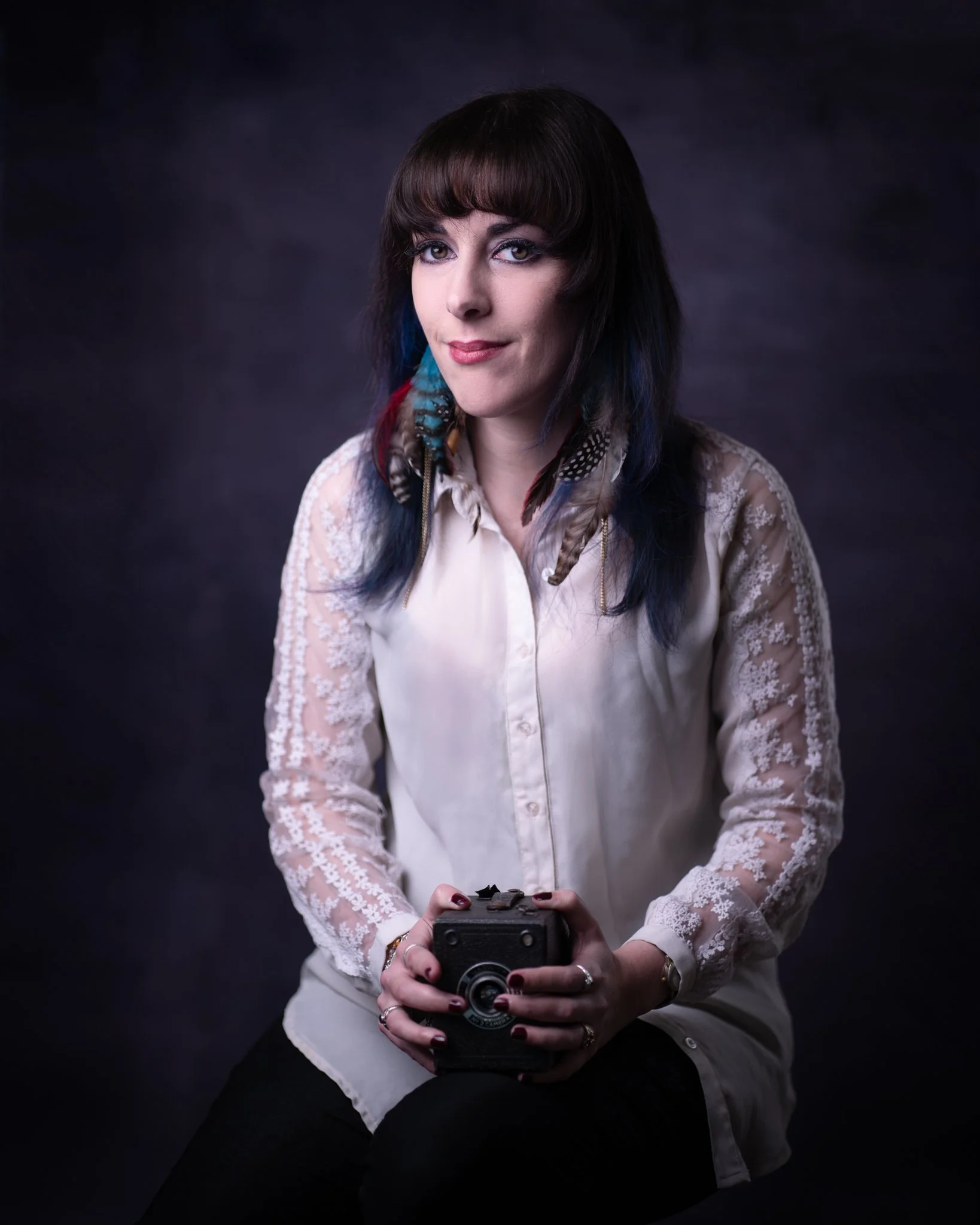
Filmmaker Spotlight - Sophie Black
Welcome to the Filmmaker Spotlight – this series shines a light on filmmakers, actors, editors, and more, as we ask them a few questions and uncover why they love what they do.
This time - Sophie Black
Director
Tell us a bit about yourself, how did you get into the industry?
I was born and raised in Derbyshire, before getting my degree in Film Production from the University of Creative Arts in Farnham, Surrey - but I’m proudly back in Derbyshire again now! I first started my career working in the art & costume departments of numerous independent shorts, features, and commercials, and I also founded a production company called Triskelle Pictures Ltd., through which my collaborators and I have produced some fantastic short films and branded content. But the main goal for me throughout all of the above was always to direct my own work, and I’m proud to say that I’ve now directed numerous short films which have screened at festivals around the world.
Who or what inspires you in your work?
I first fell in love with film as a kid when I watched all the classic 1980s fantasy films; later, when I saw Lord of the Rings in cinemas, that was the moment I decided I wanted to make films for a living, so obviously Peter Jackson is one of my heroes, and other directors such as Baz Luhrmann, Guillermo del Toro, Maya Deren, Will Sharpe, and Jane Campion have also really inspired me along the way.
My art department background definitely influenced my style as a director, as I have a very visual approach to my work. And in spite of my early love of fantasy, my favourite genre to work in is Magical Realism, where you can use cinematography, production design, and fantastical genre tropes to explore the human psyche and bring characters’ hidden thoughts, fears, and desires onto the screen. Essentially it’s about taking the tools that film specifically offers, and using them to tell the whole story of the human experience.
What have you learnt over time that you wish you knew when you started?
That you can’t predict your career path. It’s not possible to say, I will make THIS film by THIS age, and you certainly shouldn’t beat yourself up if your goals take a long time to achieve. The film industry is super hard, expensive, and complicated, so the ladder you’re climbing isn’t straight, it’s very crooked and might take you in multiple different directions (and sometimes even take you backwards) before you reach your ultimate goal. And everyone’s ladder looks different, so you can’t compare your career to others or just follow the same route as someone else and expect to get the same results. You just have to be kind to yourself and keep asking ‘what can I achieve right now, in this moment, with the time and means that I have’, rather than constantly worrying about what you can’t or haven’t achieved yet.
What’s the smallest creative decision you’ve made that had the biggest impact on a film?
It felt small at the time, but it was actually huge: letting someone else edit my film, rather than editing it myself. I used to edit all the films I directed, because I was passionate about my work and I knew I’d put the time in even without payment, but I’d never edit my own short films now. When you edit your work yourself, you’re thinking about how the scene felt on the day when you shot it, so you’re biased and you can’t always tell whether that feeling has carried over onto the screen or not - but an editor can. They are a fresh set of eyes, seeing the material without thinking about everything that went into it, so they are essentially your first audience, and they can tell you honestly how the audience will experience your film (and how to change things if the scene isn’t working as you expected). The editors I work with now are absolutely brilliant and have elevated - or even fixed! - my directing choices on a number of occasions now.
Has anything you do outside of the film industry helped in it?
My Dad was a social worker, so I grew up in a household where we always spoke considerately about mental health, which was brilliant - and that’s very much inspired the psychological approach I take to my directing, my commitment to raising awareness for mental health issues in film, and the way I make sure my sets are a positive environment for cast and crew whenever possible.
I’m also really interested in nature (I used to want to be a zoologist when I was young) and I think that’s influenced a lot of my work too, without me realising it. When we made Lepidopterist, and particularly when researching for the script, I had to read a lot of scientific articles about insects, and I learned so many random bug facts along the way - which I’d share with the crew during the shoot - so that was a lot of fun!
What’s one project you’re especially proud of, and why?
I love all my films, and I’ve learned something different from all of them, so it’s really hard to narrow it down. Night Owls - which is quite an old film now - is still special to me because it felt like the first time I’d captured my specific voice and style in a film. A Different Place had an incredible festival run and really moved audiences, so that was amazing too. And outside of directing, being longlisted for Best British Film at the BAFTAs when I produced Stop/Eject was obviously a career highlight. So I’ll have to pick three projects!
Other than directing, what is your favourite thing to do on a film?
I’ve always loved writing, and although I’ve directed other people’s scripts (and am always happy to do so), there’s something so special about being invested in your characters from the very beginning of a screenplay right through to a film’s final festival screening. The only reasons I don’t write more are that, a) I tend to write more when I feel as if I have a specific story to tell, and b) writing takes a lot of time, but there is a real lack of dedicated writing grants available in this country. So I just have to try and fit it in in my spare time, which is sadly very limited when I have bills to pay.
Is there a story you are dying to tell but haven’t yet?
I’m working towards three features - Night Owls & Early Birds and The Barn, which I’m in the process of writing on spec, and The Scent, which is just at the idea stage now - but I’m so eager to bring all three projects into the world.
Night Owls & Early Birds (the feature-length version of my short Night Owls) is my dream project because I’ve been working on the script on and off since I was just 15 years old, in any pockets of time I’ve been able to spare, and it’s grown and developed with me as I’ve experienced more of life and changed as a person as well as a filmmaker. It tells the story of a tumultuous relationship between a teenage runway and a reclusive older man, confined to a crumbling old house at the edge of the woods. It’s a neo-gothic, coming of age tale set over the Summer of 1995, with influences from classic literature such as Jane Eyre and even Beauty & The Beast to portray the young girl’s overly-romanticised view of a situation that, in reality, is not healthy for either character. And it’s usually the first thing I think about when I wake up in the morning!
Favourite on-set snack?
Haribo Strawbs or M&S Percy Pigs! I have a secret little bag of sweets on me at all times when I’m on set, as I need the sugar rush, but I try not to eat them outside of filming.
Any advice for people wanting to do the job that you do?
A lot of funding bodies are interested in authentic voices and lived experience, so it’s important that you take time to figure out who you are, what you have to say about the world, and why you are the only person who can tell the stories you want to tell, rather than dabbling in too many different genres or copying the styles of other directors just because their work is popular. Don’t just get inspiration from films - think about where you come from, what you care about, and the type of characters you specifically love working with, and keep making films about those things until you feel as though you can talk about your specific storytelling style within a single sentence. Honestly, clarity and a defined, unique, authentic voice is really important, so that execs know exactly what to expect when they invest in your films or hire you to work on their own productions.
Currently working on a project or want to plug something?
I recently finished my latest short film as a writer-director, Lacuna, funded by Amazon Prime video and the National Film & Television School, and made through their directors workshop - which was an incredible experience where I learned a lot. Lacuna is a film about moving forward with life after trauma and healing through art; it stars Sadie Soverall (who was named as a Screen Daily Star of Tomorrow last year) and Albert Magashi, and the crew I worked with were all super talented as well. The film should be coming to festivals in 2026, and I can’t wait for more people to see it, so I’ll be sharing screening dates on my social media channels as soon as I have the details.