
The Odyssey: A Return of the Epic
Epic - noun
a long narrative poem in elevated style recounting the deeds of a legendary or historical hero
the Iliad and the Odyssey are epics
Cinema loves an Epic. Ben-Hur, Spartacus, Troy and Gladiator, just to name a few. Commonly known as a subcategory of Sword and Sandals, these films are meant for the big screen.
We used to sit in the dark for a few hours and watch stories from yesteryear. From the Roman Empire to the Egyptians or the Ancient Greeks, these epics were usually stories adapted from existing tales and mythology that had been passed down through generations throughout history.
But why did we love them? Why did we stop loving them? And, most importantly, will The Odyssey help see the return of the Epic?
The Epic
A Fascinating Tale of Three Parts
Cinema Loves an Epic. For the purpose of this article, cinema began in 1895 with the Lumière Brothers in Paris, and within 20 years we already had epics in the cinema.
One of the first was Cabiria (1914), directed by Giovanni Pastrone. This epic is a silent film set in ancient Sicily, Carthage and Cirta during the Second Punic War. Now, the history buffs out there probably know what the Second Punic War is and what happened in the First and Third, but for those that don’t, fear not. Here’s a very brief history lesson.
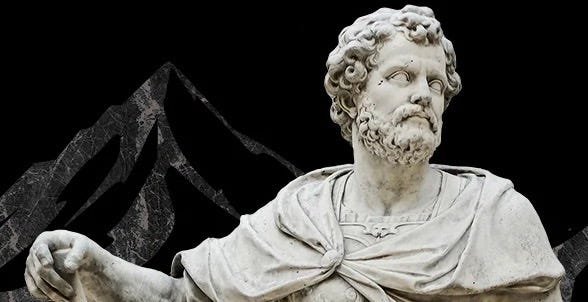
Statue of Hannibal Barca
The Punic Wars, Carthage and Hannibal at the Gates
“Punic”: The name derives from Poeni, the Roman term for the Phoenicians. Carthage was a Phoenician colony.
The First Punic War (264–241 BCE): Fought primarily at sea over control of the strategic island of Sicily. Originally the underdog in naval power, Rome built a massive fleet, won key battles, and forced Carthage to surrender. This also made a young Hannibal and his dad very angry.
The Second Punic War (218–201 BCE): Best known for the Carthaginian general Hannibal (now slightly older), who famously marched his army, including war elephants, over the Alps to invade Italy. Despite Hannibal inflicting devastating defeats on Roman legions (and scaring Italian children for centuries), Rome survived, took the fight to North Africa, and won the decisive battle.
The Third Punic War (149–146 BCE): With Hannibal now exiled, this war was less of a war and more of a heavily one-sided siege. Rome besieged Carthage for three years, eventually breaching the walls, burning the city to the ground, and selling the survivors into slavery.
Rome 3 - Carthage 0
History lesson done, we’re now back to Cabiria. This film arguably birthed the epic in cinemas, and it wasn’t long before Hollywood wanted to get involved and we got The Ten Commandments (1923), directed by Cecil B. DeMille. Not a full Sword and Sandals epic, due to the second part of the film being set in the then present day of the 1920s, but still, the first part was Moses, Egypt and the parting of the sea, which is pretty epic if you ask me.
So, by the 1930s, the epics had well and truly arrived. Ben-Hur: A Tale of the Christ (1925) and Napoléon (1927), for example. But why? Why did emerging cinema take to the epic?
Simple. Epics are fascinating tales of three parts: a beginning, a middle and an end.
Film has been defined by the three act structure since the early 1900s. History has been defined by the three act structure since, and probably before, the time of Aristotle and Ancient Greece. It is quite literally baked into the fabric of humanity and storytelling. Humanity had been telling epic tales for centuries. It’s only natural that we’d get to them when cinema came along.
The Golden Era Until…
We Looked up and Wondered
Cinema loves an Epic. The early 1900s may have given us the epic in cinemas, but it wasn’t until the mid to late 1950s that the genre exploded. Italy loved an epic and gave us films such as Hercules(1958) and The Colossus of Rhodes (1961). Cecil B. DeMille was back, this time giving us Samson and Delilah (1949) and a new version of The Ten Commandments (1956). But when you think of an epic, a few films come to mind, the ones that cemented the genre. Three true epics: Ben-Hur (1959), Spartacus (1960) and Jason and the Argonauts (1963).
Ben-Hur - 1959 - Directed by William Wyler
First up, Ben-Hur. Arguably the most famous of the genre, this Sword and Sandals, three hour epic is now synonymous with the word and is up there not only as one of the best epics in the history of cinema, but as one of the best films.
Starring Charlton Heston, Ben-Hur became one of the costliest films ever made but managed to gross over $14 million (the average in the 1950s was $2 to $4 million) at the box office and won 11 Academy Awards.
It was a hit, not only giving audiences a tale worthy of the big screen but also saving Metro-Goldwyn-Mayer from financial ruin. It had 10,000 extras and over 300 sets were built, including the largest ever made for the iconic chariot race.
Spartacus - 1960 - Directed by Stanley Kubrick
“I am Spartacus.” Before Iron Man could tell you who he was, there was Spartacus, or his fellow captured rebels to be precise. Loosely based on the events of the Third Servile War (73–71 BCE), Spartacus is about an escaped slave and gladiator who leads a rebellion against the posh boys of Rome.
The film starred Kirk Douglas and was a hit, both at the box office and with critics, with the film winning four Academy Awards.
Jason and the Argonauts - 1963 - Directed by Don Chaffey
Jason and the Argonauts took to the big screen in 1963. The film opened to a good reception and slightly underperformed at the US box office, but instantly became a cult classic. To really appreciate why, we need to learn about one legend. This one isn’t Jason, it’s Ray Harryhausen.
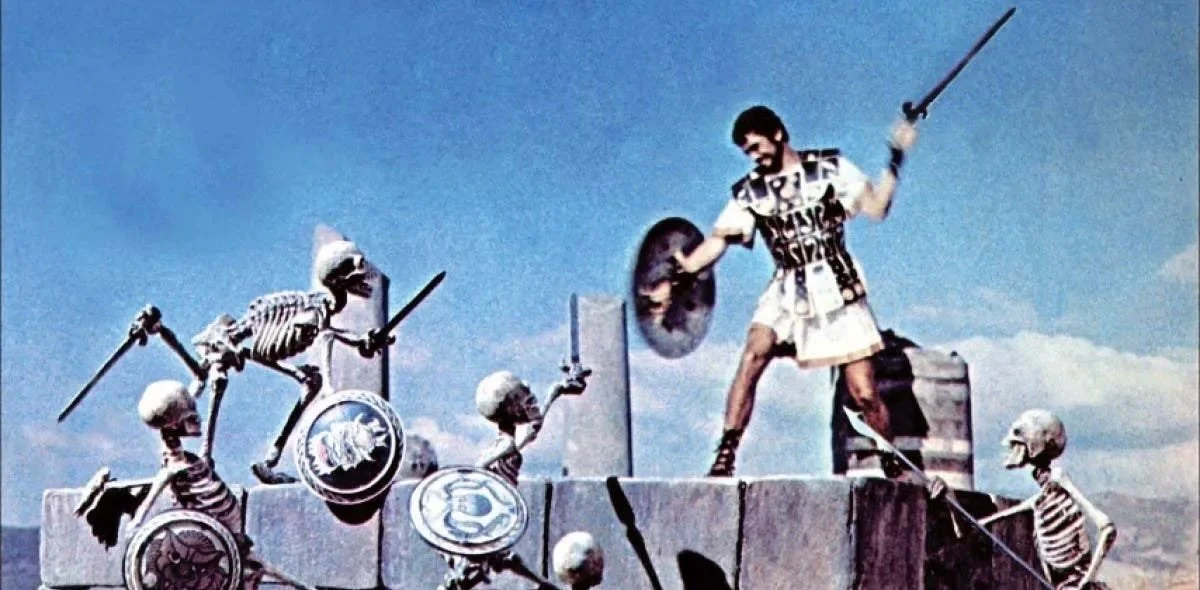
Still from Jason and The Agronauts
Ray Harryhausen
If I say stop motion, you probably think of Wallace and Gromit, or maybe A Nightmare Before Christmas (1993), or one of Ray Harryhausen’s creations. Ranging from Mighty Joe Young to a giant octopus, Medusa, Talos or an army of skeletons, he did the lot.
Pioneering a method called Dynamation, Ray brought some of cinema’s most iconic creatures and monsters to life. If Marvel was around back then, he would’ve been overworked and underpaid. (Love you, Marvel, but please pay those VFX artists a good wage. And let them sleep.) Ray was the man.
Even now, the effects hold up. It’s quite amazing to see men fighting an army of skeletons and actually believe it, and it’s all due to the performances, not just of the actors, but of the skeletons, of the monsters, of Ray. He found a way to bring these fantastical beings to life and make you believe it.
So, the epic was well and truly in its golden age, but something was happening above that could spell the end for the genre.
Don’t look Up
Space. April 1961, the Soviets successfully launched Yuri Gagarin into orbit around the Earth, and after one hour and forty eight minutes, he landed back on Soviet soil.
It was an achievement for humanity and lit a fire in the US that would last for over a decade. We knew space was possible, and the more we looked up, the less we looked back. The change in government priorities caused a change in filmgoing audiences. Young kids were now inspired by astronauts and the wonders of space, and some of those young kids would grow up to work in film and be inspired by what they used to dream of. Not Ancient Greece or the Carthaginians, but what lies above.
The Slow Death of a Genre
We swapped Ancient Rome for Magical Worlds
Cinema loved an Epic. The golden age of the epic was fading by the 1970s. A few still clung on, Caligula (1979) and The Golden Voyage of Sinbad (1973) to name a couple, but they were different. The audience had changed and wanted something more, and as the 80s rolled around, mythology was swapped for magic.
The 80s gave us a new sub-genre of the epic: Sword and Sorcery. This included films such as Conan the Barbarian (1982), Excalibur(1981) and The Beastmaster (1982). These all opened to varying degrees of success, but they had done the job of captivating the audience.
Cinema exploded in the 80s and into the 90s with the birth of computer graphics. What once made the epics unique, with their vast sets and amazing model work, was now a thing of the past. The digital age had begun and filmmakers realised they could take us anywhere.
But like any good epic, the hero that seemed down and out had one last push in them. While the 90s kept us going with the likes of Braveheart (1995), it was the early 2000s when the genre stood back up and faced its enemy. Gladiator (2000), Troy (2004), Alexander(2004), Kingdom of Heaven (2005) and 300 (2007) brought a resurgence to the epic. Ancient Rome, Ancient Greece and the Crusades, we were back.
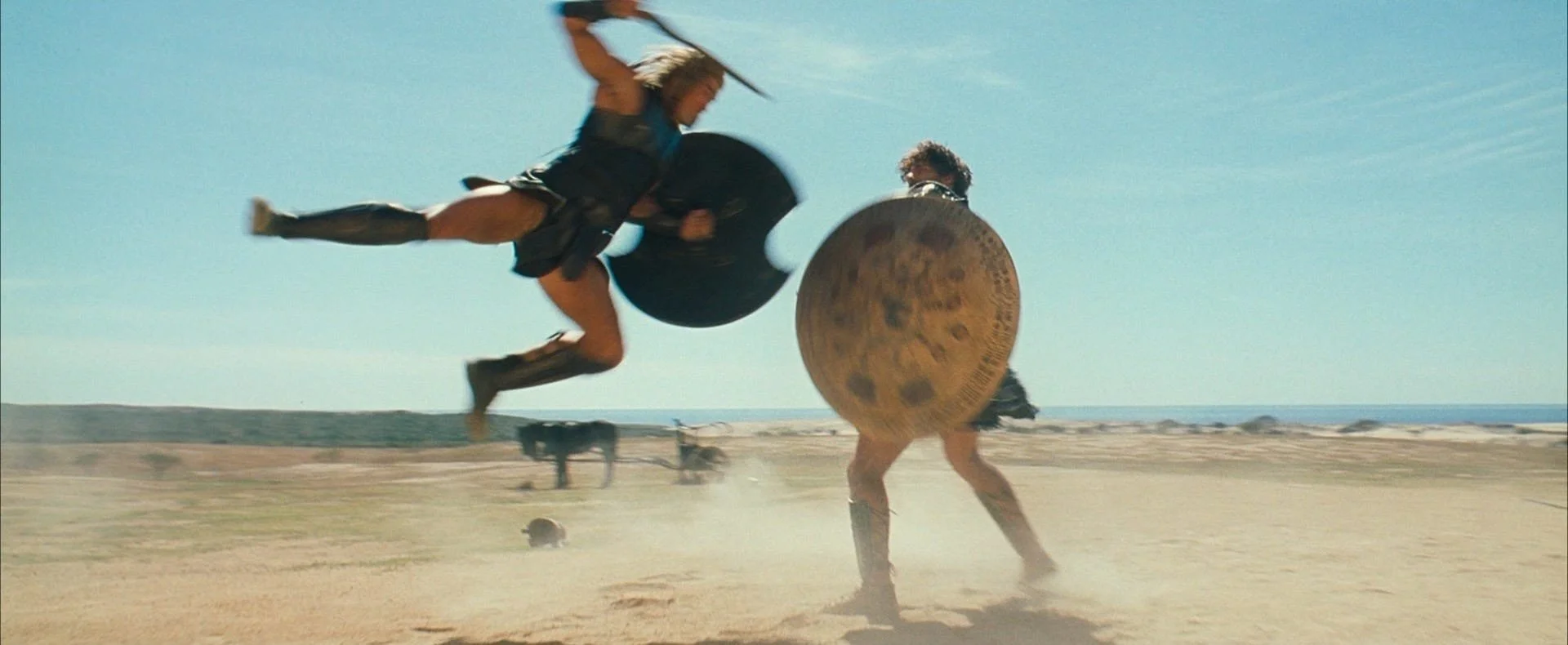
Still from Troy
Or so we thought. Just around the corner in the 2010s were arguably some of the worst received epics. Clash of the Titans (2010), Pompeii (2014) and Exodus: Gods and Kings (2014) did the genre no favours. But why the change? Why did we go from some of the best films of the genre to some of arguably the worst?
Honestly, I’m not sure. The films seemed to evolve from true epics to just generic action films set in an ancient world. So here’s a quick comparison between 300 (2007) and Clash of the Titans (2010). Both action heavy, both take liberties, yet one is epic and the other just isn’t.
Clash of the Titans - 2010 - Directed by Louis Leterrier
Clash of the Titans is actually a remake of the 1981 film of the same name. It loosely follows the Greek myth of Perseus as he battles Medusa and other beasts, eventually going head to head with the Kraken delivered by Hades himself. I actually quite like this film. It’s fun, but that’s also the problem. It’s surface level. It took an epic myth and turned it into a Hollywood action film. Sam Worthington could be Perseus or a marine from the future. Overall, it’s fine but lacks that charm and grandeur you would associate with a true epic.
300 - 2007 - Directed by Zack Snyder
Now 300 is completely different. Based on Frank Miller’s graphic novel of the same name, which is in turn very loosely based on the famous story of the Spartans and the Battle of Thermopylae (480 BCE), 300 achieves epic status due to its love for the genre. Now yes, Zack and Frank took liberties with a lot of what actually happened, but it works because they believed in it. Where Clash of the Titans tried to be an action film first, 300 embraces the epic, and that makes the action all the more effective. Unfortunately, Hollywood saw this and took it the wrong way.
That’s what killed the blockbuster epic. Studios started believing the thing that made them epic was the action, not the stories or the characters.
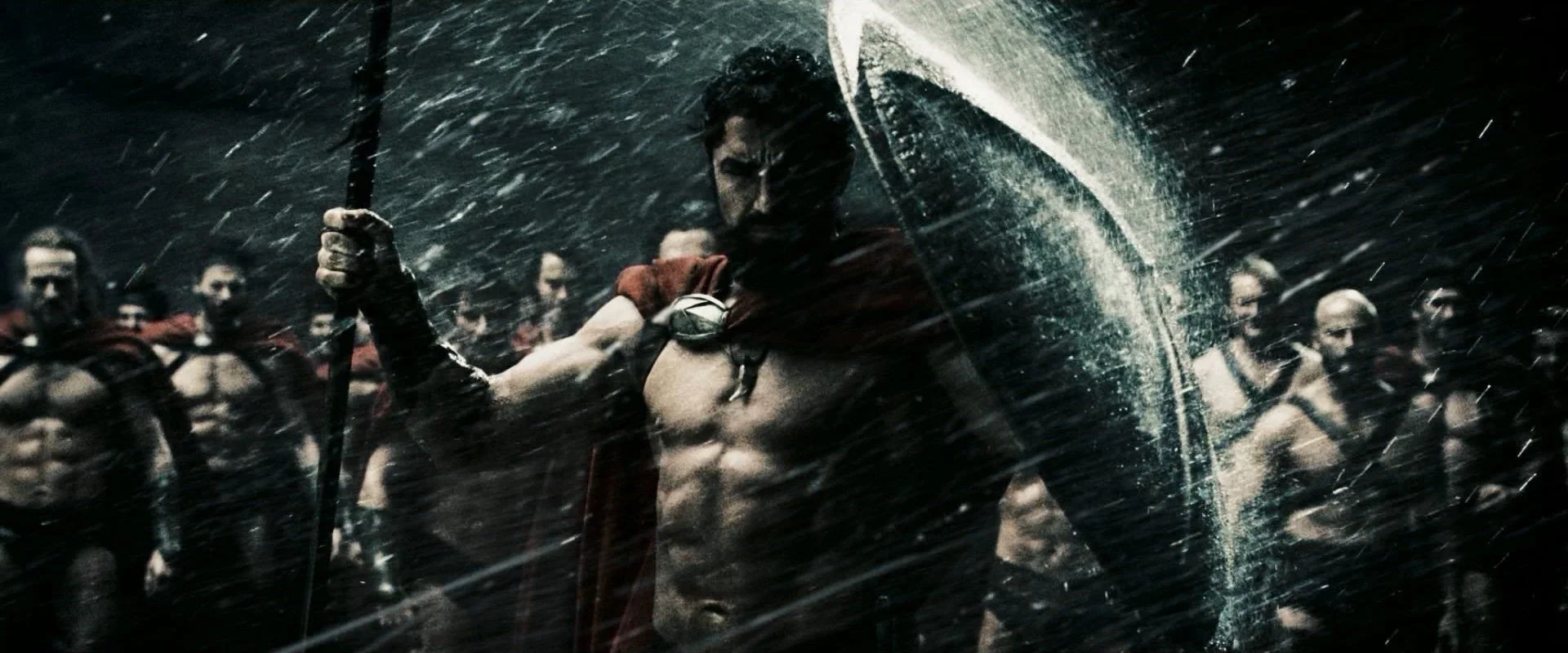
Still from 300
The Odyssey
An epic worthy of a big screen
Cinema loves an Epic. They didn’t stay down for long. After a few years dormant, we started getting smaller, independent epics like Macbeth (2015) and The Northman (2022). Smaller budgets, smaller scale, but no less epic. Yet these still didn’t fill that void of Gladiator or Troy. We needed something to help revive the genre, or someone.
Christopher Nolan
If you could pick one director to attach to a film and almost guarantee success with both audiences and critics alike, you would probably pick Christopher Nolan.
Now I’m sure I don’t have to go into the Nolan lore in this article. Most people have seen one of his Dark Knight films, Inception(2010) or Interstellar (2014). The guy is pretty good at directing and is the perfect choice to revive a dead or dying genre.
This is being written before The Odyssey (2026) comes out, so what I’m about to say might be unbelievably wrong, but I truly think The Odyssey will be one of Nolan’s best. I base this off the fact I’m a huge fan of Matt Damon, and the rest of the cast is stellar, and let’s be honest, how can you make the story of The Odyssey bad?
For those who don’t know the story of The Odyssey or just fancy a quick recap, here you go.
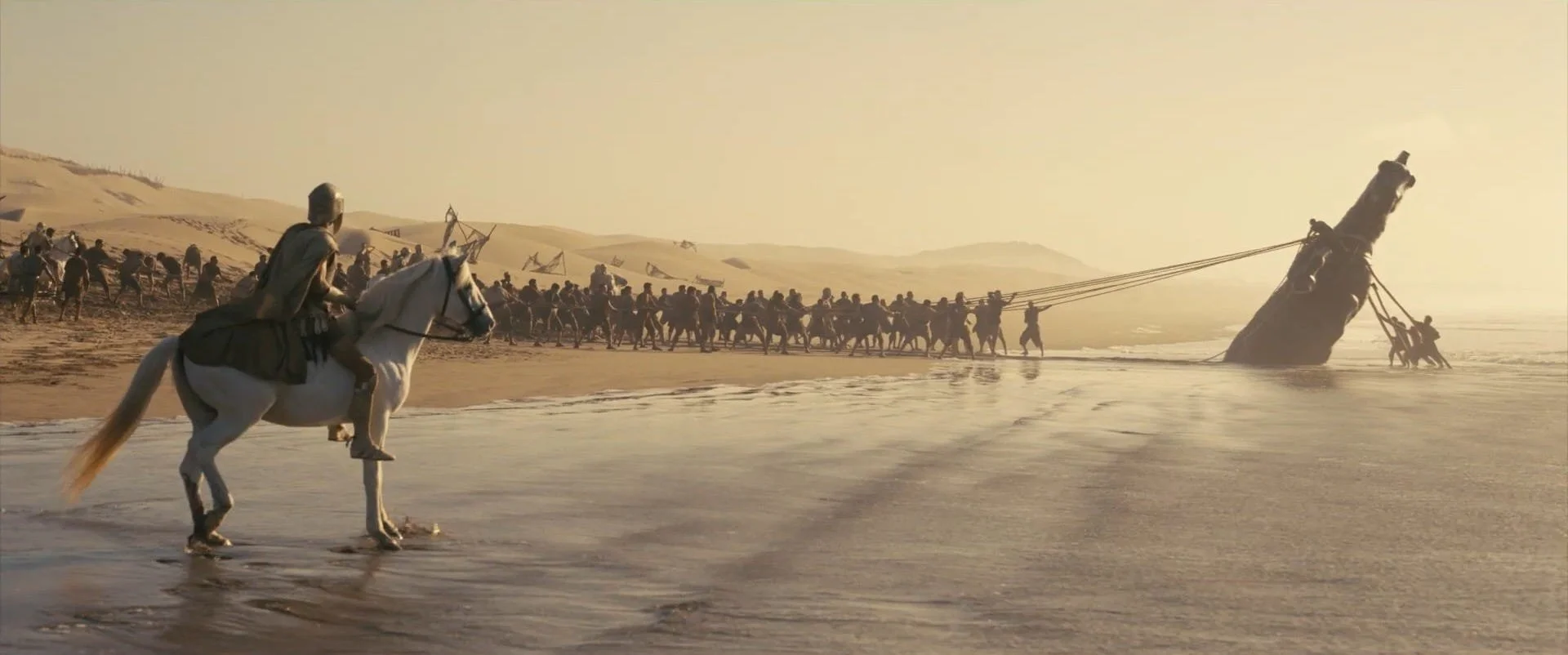
Still from The Odyssey
Homer and The Odyssey
Before being a doughnut loving, simple man, Homer was a blind author from Ancient Greece, and one of his greatest works was the epic poem The Odyssey.
The word epic was given to poems and stories of, well, epic proportions. One of the earliest recorded epics was The Epic of Gilgamesh from Ancient Mesopotamia, but we’ll talk about that some other day. We’re focusing on Homer’s The Odyssey.
Like any great story, we need a hero. Ours is the Greek king Odysseus. Having just finished the ten year long Trojan War, all he wants to do is go home (seems fair), but that would make for a pretty dull story, so instead he has to go on an additional ten year journey to get home, in which he encounters the Cyclopes, the Laestrygonians (cannibals), the Sirens, Scylla and Charybdis, and a cow from the sun god Helios. Odysseus is tested, but after everything he’s put through, he endures.
During all of this, Odysseus is presumed dead, so his son (Telemachus) and wife (Penelope) have to deal with a load of blokes wanting to be next on the throne.
The story focuses on themes of returning, testing character, and omens. It’s widely regarded as one of the most significant works in the Western canon. So you can see why it might make for a good film.
Where the Journey Ends
So here we are, at the end. We made it home from our long voyage, through trials and tribulations across land and sea, all to make it home.
Epics have been a part of humanity for a lot longer than cinema, but recently we lost our way with them. So will The Odyssey see a return of the epic blockbuster? I don’t know. I hope so. I love an epic, and since setting off on this journey I think I’ve found something that I just keep coming back to.
